



Branched Chain Amino Acid Transaminase (BCAT)
Branched Chain Amino Acid Transaminase, Branched-Chain amino acids aminotransferase
Branched Chain Amino Acid Transaminase (BCAT) is a key enzyme regulating the initial catabolism of branched-chain amino acids (BCAAs: leucine, isoleucine, and valine). It catalyzes the first, reversible transamination step that converts BCAAs into their corresponding α-keto acids (BCKAs). There are two isoforms of BCAT: the cytosolic form (BCATc or BCAT1) and the mitochondrial form (BCATm or BCAT2). BCAT1 is mainly expressed in the brain and immune cells (such as activated T lymphocytes and macrophages), while BCAT2 is widely expressed in tissues such as skeletal muscle, kidney, pancreas, stomach, and colon. Unlike most amino acids, the initial site of BCAA catabolism is skeletal muscle rather than the liver, due to the low hepatic BCAT activity. The primary functions of BCAT include regulating protein synthesis (via activation of the mTOR pathway), maintaining glucose homeostasis, participating in neurotransmitter synthesis, modulating immune responses, and contributing to energy metabolism. Leucine, in particular, serves as a potent metabolic signal that directly or indirectly activates the mTORC1 pathway, thereby affecting cell growth, autophagy, and insulin signaling. Dysregulation of BCAT is closely associated with various diseases. Congenital defects in BCAT can cause maple syrup urine disease (MSUD). In addition, BCAT expression and activity are often altered in conditions such as type 1 and type 2 diabetes, obesity, and insulin resistance, leading to abnormal BCAA levels and contributing to lipid accumulation and metabolic disturbances. Moreover, BCAT1 is upregulated in multiple cancer types, where it contributes to metabolic reprogramming and promotes tumor growth and invasiveness. Altered BCAT expression is also implicated in Alzheimer’s disease, heart failure, and hepatic and renal disorders. Thus, BCAT is not only a critical node in BCAA metabolism but is also closely involved in the development and progression of many chronic diseases, making its metabolic regulatory mechanisms an important subject of study[1][2].
References:
- [1]. Zhang X, et al. A Review on Branched-Chain Amino Acid Aminotransferase (BCAT) Inhibitors: Current Status, Challenges and Perspectives. Curr Med Chem. 2025 Jan 8. [Content Brief]
- [2]. Dimou A, et al. The Critical Role of the Branched Chain Amino Acids (BCAAs) Catabolism-Regulating Enzymes, Branched-Chain Aminotransferase (BCAT) and Branched-Chain α-Keto Acid Dehydrogenase (BCKD), in Human Pathophysiology. Int J Mol Sci. 2022 Apr 5;23(7):4022. [Content Brief]
All Product Categories
-
Branched Chain Amino Acid Transaminase (BCAT) Related Products (3)
Related Products (3)

-
Sodium α-ketoisocaproate
 0 ImagesSynonyms: Sodium 4-methyl-2-oxopentanoate; 2-Ketoisocaproic acid sodium saltSodium α-ketoisocaproate (Sodium 4-methyl-2-oxopentanoate) is an insulin secretagogue. Sodium α-ketoisocaproate undergoes transamination catalyzed by BCAT and BCATm to produce α-ketoglutarate and leucine; it also binds to the SUR1 site to inhibit KATP channel activity, but does not directly affect the Kir6.2 subunit. Sodium α-ketoisocaproate regulates Ca2+ influx. Sodium α-ketoisocaproate exerts insulinotropic activity in pancreatic islets and intact mouse pancreata with sufficient BCATm expression. Sodium α-ketoisocaproate can be used in research related to type 2 diabetes.
-
Platycodin D3
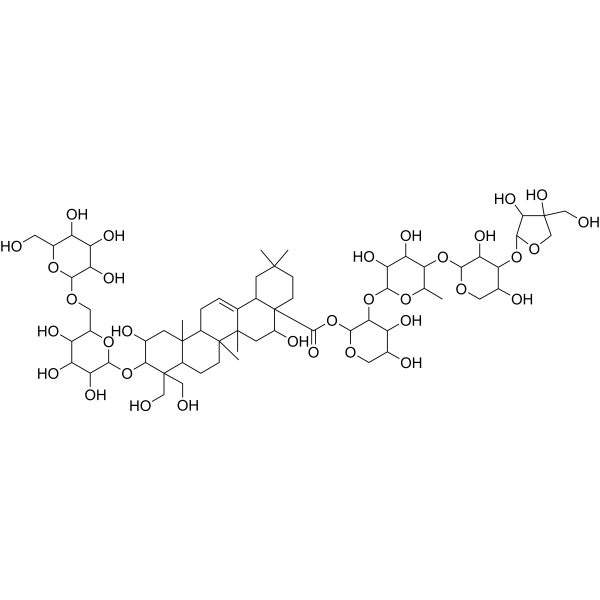 0 ImagesPlatycodin D3 is a triterpenoid saponin that can be found in Platycodon grandiflorum. Platycodin D3 exhibits multiple activities including anti-inflammation, regulation of airway mucus secretion, improvement of asthmatic airway inflammation and remodeling, and inhibition of hepatitis C virus (HCV) replication. The IC50 value of Platycodin D3 against HCV NS5B RNA-dependent RNA polymerase is 8 μg/mL. Platycodin D3 can be used in studies related to asthma, hepatitis C virus infection and inflammatory diseases.
-
Sodium α-ketoisocaproate-d3
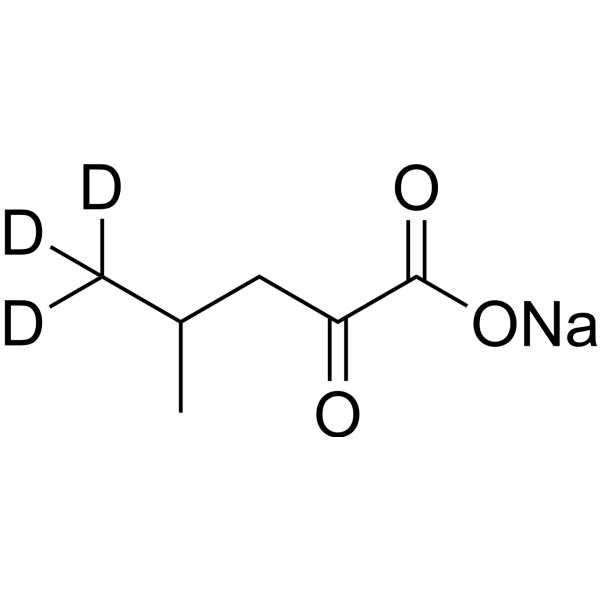 0 ImagesSynonyms: Sodium 4-methyl-2-oxopentanoate-d3; 2-Ketoisocaproic acid-d3 sodium saltSodium α-ketoisocaproate-d3 (Sodium 4-methyl-2-oxopentanoate-d3; 2-Ketoisocaproic acid-d3 (sodium salt)) is the deuterated-labeled Sodium α-ketoisocaproate (HY-W017387). Sodium α-ketoisocaproate (Sodium 4-methyl-2-oxopentanoate) is an insulin secretagogue. Sodium α-ketoisocaproate undergoes transamination catalyzed by BCAT and BCATm to produce α-ketoglutarate and leucine; it also binds to the SUR1 site to inhibit KATP channel activity, but does not directly affect the Kir6.2 subunit. Sodium α-ketoisocaproate regulates Ca2+ influx. Sodium α-ketoisocaproate exerts insulinotropic activity in pancreatic islets and intact mouse pancreata with sufficient BCATm expression. Sodium α-ketoisocaproate can be used in research related to type 2 diabetes.



